Tower Rush Game Mechanics and Features
Tower Rush is a Galaxsys fast game built around stacking floors and watching each placement change the round outcome. This page focuses on the confirmed mechanics, mobile play, bonus floors, and the simple checks that help you read a session clearly.
Game Mechanics and Features format and core rules

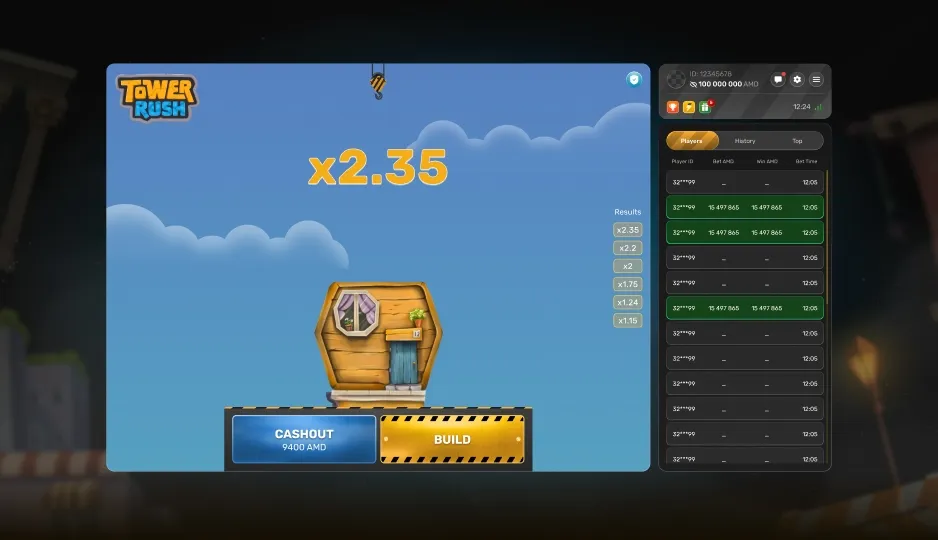
The main loop is straightforward: floors are added one by one as long as the tower stays upright. Every safe landing raises the multiplier, with each step feeding into the final result. There are no reels or payline layout here; the tower shown on the screen is the whole focus, and the result is shaped by how tall it remains before the session ends.
For a practical read of the round, break it into three steps: place a floor, watch the multiplier rise, and choose whether to keep going or cash out. Exiting the round returns the stake with the accumulated multiplier applied. The stake is the amount put on the round, while the cashout amount is the value the game gives back from that round based on the total built so far.
| Core element | What it means in play |
|---|---|
| Floor stacking | Each round is built by placing floors one after another. |
| Multiplier buildup | Every successful floor adds to the total through multiplication. |
| Cashing out | The round pays the stake multiplied by the accumulated multiplier. |
Because the multipliers are multiplied together, later placements matter as part of a chain rather than as isolated steps. A player who wants a shorter session can treat the stack as a simple stop point: take the payout after a few successful floors, or keep going only if the current round still fits the intended plan. The game does not require you to read any additional symbol system to understand the main result.
Game Mechanics and Features risk, pace, and session planning
The game is classified as a fast game, so sessions are designed around quick rounds rather than long setup. The pace is useful for players who prefer direct round resolution and simple decision points. Since the stack can collapse, the important choice is not only how far to continue, but also when to stop before the round pushes beyond your comfort level.
A practical session plan starts with a stake size you are comfortable using on a fast round format. From there, the player can decide in advance whether the goal is a short cashout after a few floors or a longer attempt that seeks a larger accumulated multiplier. The confirmed mechanics do not add extra side bets or separate bonus wagers, so the plan stays centered on the stake and the floor sequence.
| Session choice | Useful approach |
|---|---|
| Short round focus | Cash out after a few successful floors and keep the session compact. |
| Longer round focus | Continue stacking only if you are comfortable with the round ending before you stop. |
| Stake control | Set the stake first, then decide how much of the round you want to play through. |
The RTP range listed for the game is 96.2% to 97.6%. RTP is the long-term theoretical return of the game, not a promise of a player’s result in any single session. For that reason, it is better to use RTP as a background reference and not as a reason to expect a fixed outcome from one round or one short visit.
Released on 2024-02-28, the game belongs to Galaxsys' Fast / Turbo Games category. That category label fits the round structure: the action is compact, the decisions are immediate, and the result is tied to the current stack rather than to a longer feature chain.
How Game Mechanics and Features works on mobile
Mobile play is clearly available through both the demo and the app. The verified mobile demo option helps you check the stacking action on a phone before moving into the main game mode. That makes the mobile version handy for fast testing, especially when you want a clearer look at the floor placements on a smaller screen.
On a phone or tablet, the key task is still the same: follow the stack, watch the multiplier build, and decide when to stop. The game does not introduce a separate mobile-only rule set in the available details, so the main advantage is convenience rather than a different mechanic. If you are testing the game for the first time, the demo is the cleanest way to learn the sequence without changing your setup.
Mobile support also matters for pace. Because the round is fast, the phone version suits short sessions where you can check the stack, play a few rounds, and leave without managing a complex interface. The practical reader action here is simple: open the demo on mobile first, confirm that the screen layout is comfortable, and then use the same flow in the app version if you prefer it.
Game Mechanics and Features bonus and balance checks
The bonus floors listed here are Frozen Floor, Temple Floor, and Triple Build. These named elements are tied to the game and stand out as the confirmed extras beyond the core stacking mechanic. As no further feature rules are provided, the safest view is to treat them as special floor types rather than a wider slot-style bonus package.
A useful balance check is to separate the round stake from the amount that may be returned by cashout. The stake is the starting amount you place on the round. The cashout amount is what you receive if you stop after a successful stack, and that amount is based on the accumulated multiplier. Keeping that distinction clear helps you read the round without mixing up your entry amount and the payout formula.
The table below keeps the supported items in one place so the feature list stays easy to scan.
| Confirmed feature | Practical note |
|---|---|
| Frozen Floor | One of the named bonus floor types linked to the game. |
| Temple Floor | One of the named bonus floor types linked to the game. |
| Triple Build | One of the named bonus floor types linked to the game. |
| Demo availability | A demo is available, including a mobile demo. |
If you are checking balance planning, use the feature names only as part of the round’s structure and do not assume any extra payout rules beyond the confirmed cashout formula. The direct action is to test the demo, observe how the bonus floor names appear in the flow, and keep your stake size aligned with the pace of a fast round.
Common Game Mechanics and Features mistakes
A common mistake is to treat the game like a standard slot with reels, paylines, or free spins. None of those mechanics are confirmed here, so the correct reading is to focus on stacked floors and the multiplier chain. Another mistake is to assume that a successful floor gives a standalone reward; in this game, the confirmed mechanic is cumulative, because each successful placement contributes to a multiplied total.
It is also easy to blur the difference between cashing out and withdrawing from an account. Cashing out happens inside the round and uses the accumulated multiplier applied to the stake. Account withdrawal is a separate banking action and is not part of the game mechanics described here. Keeping those two ideas apart makes it easier to follow the round without expecting a cashier feature inside the game.
The game’s fast pace can lead players to rush the decision to continue. A more practical approach is to decide before the round starts how many successful floors feel like a sensible stopping point. That way, the choice is made from a plan rather than from pressure during play.
Is Tower Rush a reel-based game?
No. The confirmed mechanic is floor stacking, where players place floors and watch the multiplier build. The available details do not describe reels or paylines, so the round should be read as a stack-based fast game rather than a standard slot layout.
What happens after each successful floor?
Each successfully placed floor contributes a multiplier, and the multipliers are multiplied together. That means the round value grows through the sequence of successful placements rather than through separate, unrelated awards.
How does cashing out work in the game?
Cashing out pays the stake multiplied by the accumulated multiplier. The key point is that cashing out is a round action, while the stake is the amount placed at the start of that round.
What bonus floors are confirmed?
The confirmed bonus floors are Frozen Floor, Temple Floor, and Triple Build. These are the named feature elements associated with the game, and no extra rule set is stated beyond their names.
Can I try the game on mobile first?
Yes. A demo is available, and a mobile demo is also available. That makes it possible to check the stacking flow on a phone before using the app or other play option.
Ready to Play Tower Rush?
Try the demo or play at Mostbet Pakistan with local payment methods.